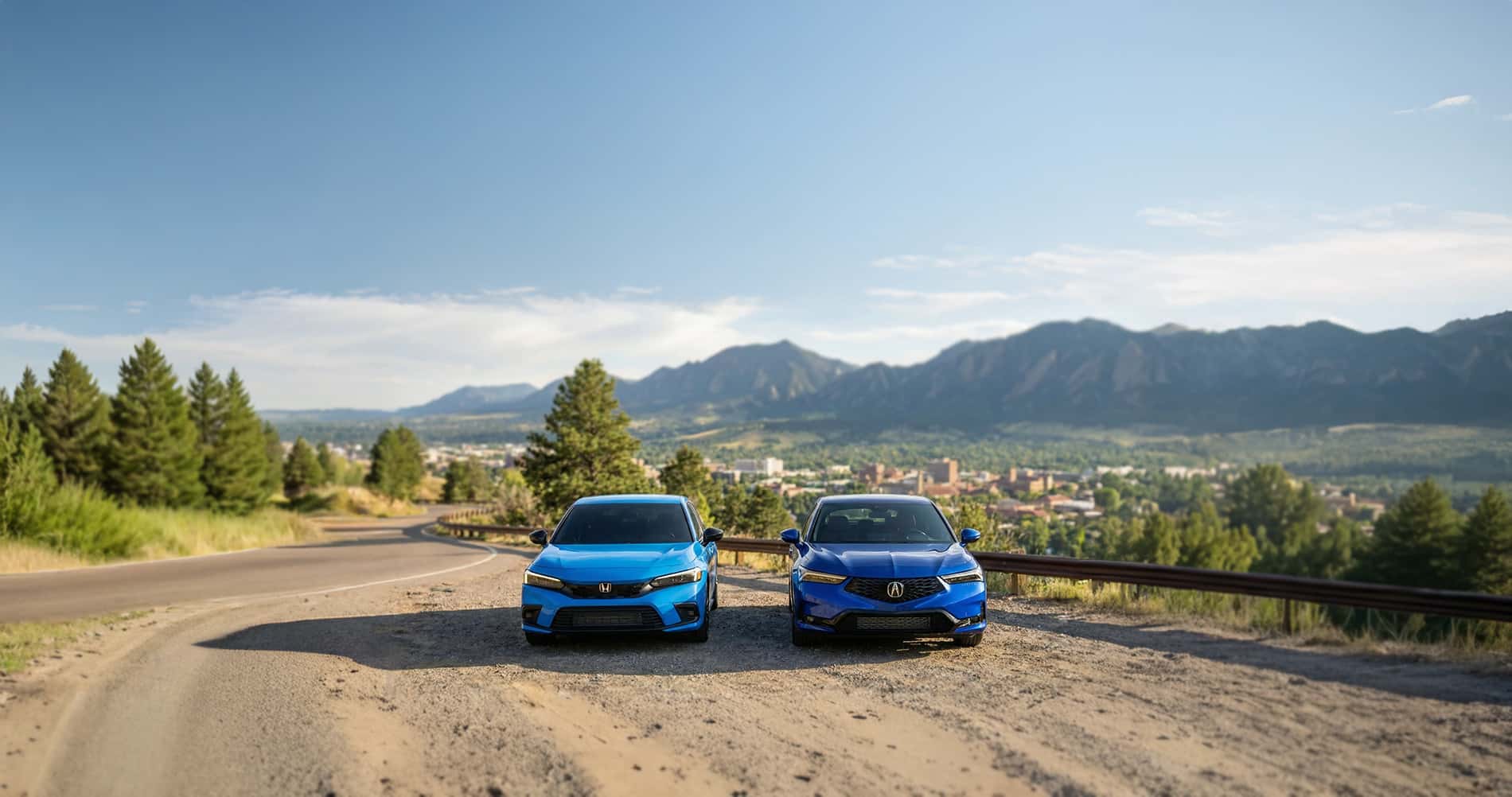
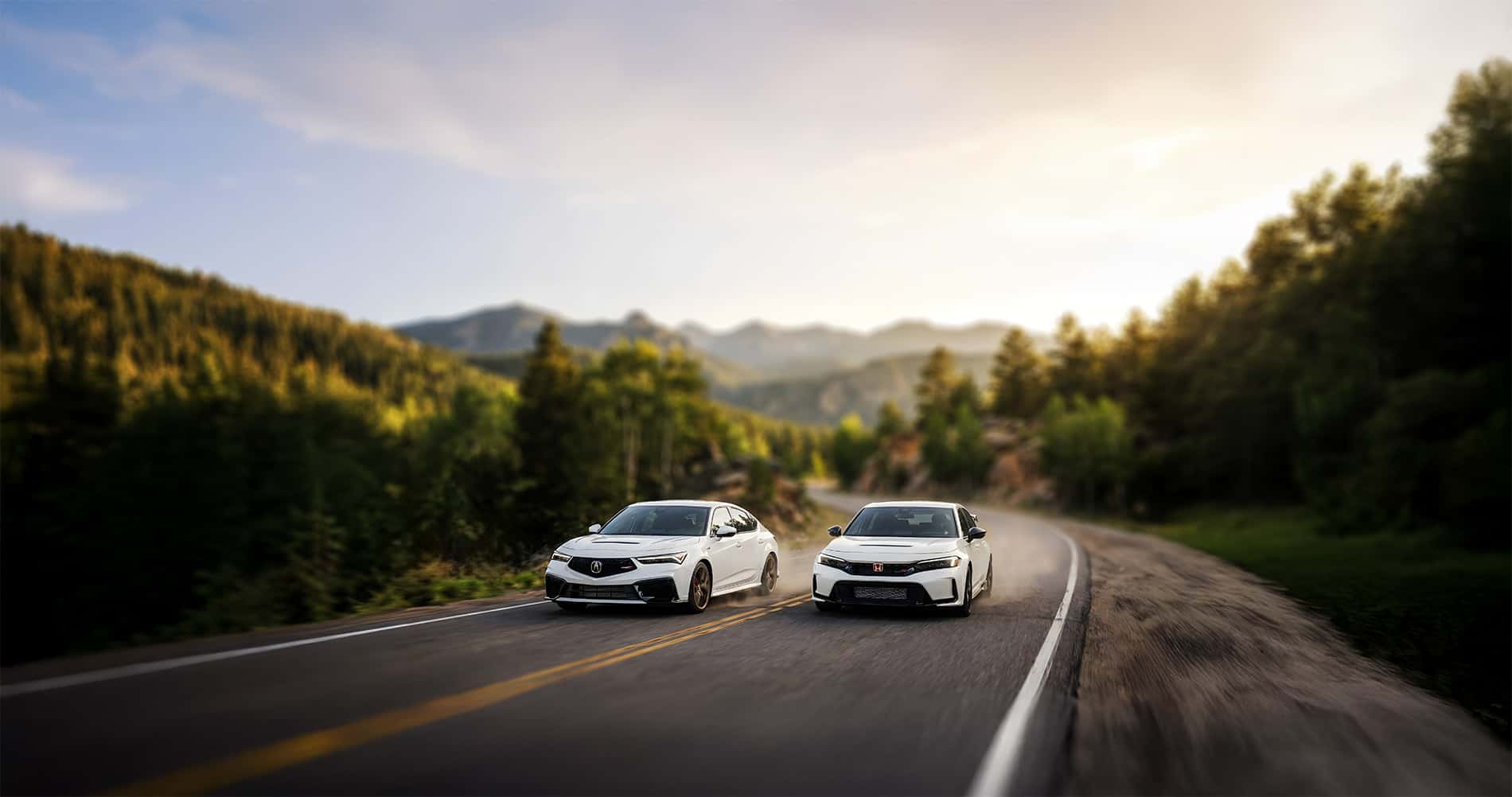
Choosing between the Acura Integra vs Honda Civic is a common decision for drivers who want a compact car that balances performance, efficiency, and everyday usability.
While these two models share a similar footprint and reputation for reliability, they are designed with very different buyers in mind. The Civic has long been known for its value‑driven approach, offering strong fuel economy, hybrid options, and approachable pricing. The Integra builds on that foundation by adding premium materials, more standard features, and a sport‑focused driving experience.
Whether you’re commuting through Boulder, running errands around Longmont, or planning weekend drives beyond the Front Range, these details matter. By the end of this guide, you’ll have a clear understanding of how the Integra vs Civic comparison plays out in everyday ownership and which one best matches your priorities.
↳ WHICH MODEL IS BETTER FOR DAILY COMMUTING?
The Honda Civic Hatchback is typically the better commuter thanks to its strong fuel economy, especially in hybrid form. Drivers benefit from fewer fuel stops and lower running costs. The Integra remains efficient, but it prioritizes driving feel over maximum mpg.
↳ WHICH VEHICLE FEELS MORE PREMIUM INSIDE?
The Acura Integra offers a more upscale cabin with higher‑quality materials, larger digital displays, and available premium audio. For drivers spending long hours on the road, the added refinement can make daily drives more comfortable.
↳ IS THE INTEGRA FASTER THAN THE CIVIC?
In standard trims, the Integra delivers more power than the Civic’s base gas engine, resulting in quicker acceleration. At the performance level, the Integra Type S vs Civic Type R comparison is very close, with both offering similar power and track‑ready performance.
↳ WHICH MODEL IS MORE AFFORDABLE OVERALL?
The Civic Hatchback has a lower starting price and more budget‑friendly trims, making it a strong choice for cost‑conscious buyers. The Integra costs more upfront but includes additional features and refinement that many shoppers find worthwhile.
↳ WHICH ONE SHOULD PERFORMANCE ENTHUSIASTS CHOOSE?
Drivers who want performance with everyday comfort often lean toward the Integra Type S, while those seeking a more aggressive, track‑focused experience prefer the Civic Type R. The choice comes down to comfort versus pure performance.
↳ WHICH MODEL HOLDS ITS VALUE BETTER OVER TIME?
The Integra typically retains value slightly better due to its premium branding and higher standard equipment. The Civic still offers strong long‑term value thanks to its reliability and lower ownership costs.
| 2026 Acura Integra Trim Levels + Starting MSRP* |
2026 Honda Civic Hatchback Trim Levels + Starting MSRP* |
|---|---|
| Integra $31,800
Integra A‑Spec® $34,800 Integra A‑Spec® w/ Technology $38,800 Integra Type S $52,900 |
Sport Hatchback $26,450
Sport Hybrid Hatchback $30,950 Sport Touring Hybrid Hatchback $33,950 Civic Type R $45,895 |
When comparing the Acura Integra vs Honda Civic, pricing and trim structure reveal two very different approaches to the compact hatchback segment.
The Integra lineup starts at a higher price point, but that premium reflects a more upscale baseline. Even the entry‑level Integra includes features that many Civic buyers won’t see until higher trims, making it appealing for drivers who want a refined daily experience without navigating long option lists.
The Civic Hatchback, by contrast, emphasizes accessibility. Its lower starting price makes it attractive for budget‑minded shoppers in places like Longmont or Broomfield, especially those prioritizing efficiency or hybrid technology. The Civic’s hybrid trims deliver impressive fuel economy at a price that undercuts most luxury‑branded competitors, which can translate into real savings for commuters.
Where the comparison becomes more emotional is at the top end.
The Integra Type S vs Civic Type R matchup highlights two performance‑focused philosophies. The Type R is the more affordable track‑ready option, while the Integra Type S commands a higher price by blending serious performance with premium materials and everyday comfort. For drivers in Boulder or Louisville who want a car that feels special every time they get behind the wheel, that balance can justify the extra cost.
Ultimately, the Integra vs Civic decision comes down to priorities: value and efficiency versus refinement and performance prestige.
| Category | 2026 Acura Integra | 2026 Honda Civic Hatchback |
|---|---|---|
| Engines | 1.5L Turbocharged Inline‑4 Standard Lineup |
2.0L Inline‑4 Gas 2.0L Hybrid Inline‑4 Hybrid |
| Power Output | 200 Horsepower / 192 lb‑ft Torque 1.5T |
150 Horsepower / 133 lb‑ft Torque 2.0L Gas 200 Horsepower Hybrid System Output |
| Drivetrain | Front‑Wheel Drive | Front‑Wheel Drive |
| Transmission |
CVT Standard 6‑Speed Manual A‑Spec® Tech |
CVT Gas & Hybrid |
| Max MPG Rating* | 30 City / 37 Highway CVT 26 City / 36 Highway Manual |
30 City / 38 Highway Gas 50 City / 45 Highway Hybrid |
| Performance Model Specs | Integra Type S: 2.0L Turbocharged Inline‑4 320 Horsepower / 310 lb‑ft Torque 6‑Speed Manual 21 City / 28 Highway High‑Performance Adaptive Damper System (ADS) • Dual‑Axis Front Suspension • Helical Limited‑Slip Differential • Brembo® Front Brake Calipers • Wider Track & Lightweight 19‑Inch Wheels • Sport+/Individual Drive Modes |
Civic Type R: 2.0L Turbocharged Inline‑4 315 Horsepower / 310 lb‑ft Torque 6‑Speed Manual 22 City / 28 Highway Adaptive Damper System • Dual‑Axis Front Suspension • Helical Limited‑Slip Differential • Brembo® Front Brake Calipers • Track‑Tuned Chassis • Lightweight 19‑Inch Wheels • +R Drive Mode |
This performance and efficiency comparison highlights how the Acura Integra vs Honda Civic lineup is designed to serve very different types of drivers, even though both models share a compact hatchback footprint.
The Integra focuses on delivering consistent turbocharged performance across its standard lineup, offering 200 horsepower from its 1.5‑liter engine. That extra power is noticeable in everyday driving, especially during highway merges or climbing grades around areas like Boulder or Superior, where responsiveness matters more than raw fuel savings.
The Civic Hatchback takes a broader approach. Its standard gas engine prioritizes efficiency, while the available hybrid system dramatically boosts fuel economy. For commuters in Longmont or Erie, the hybrid’s 50 city mpg rating can significantly reduce fuel stops and long‑term ownership costs. This makes the Integra vs Civic decision especially relevant for buyers balancing performance with daily operating expenses.
Transmission options also shape the experience. The Integra’s available six‑speed manual appeals to drivers who enjoy a more connected feel, while the Civic keeps things simple with a CVT across its non‑performance trims.
At the top end, the Integra Type S vs Civic Type R comparison shows two performance philosophies. Both deliver similar power, but the Type S blends track‑ready hardware with premium tuning, while the Type R leans harder into aggressive chassis setup and driver engagement.
Overall, Acura Integra vs Honda Civic comparisons come down to priorities: refined performance and driver involvement versus maximum efficiency and value.
| Exterior Dimensions | 2026 Acura Integra | 2026 Honda Civic Hatchback |
|---|---|---|
| Length | 185.8 in | 179.0 in |
| Width | 72.0 in | 70.9 in |
| Height | 55.5 in | 55.7 in |
| Wheelbase | 107.7 in | 107.7 in |
| Ground Clearance | 5.1 in | 5.1 in |
NOTE: Type S & Type R models may have slightly different dimensions — typically longer, lower & wider.
Looking at exterior dimensions helps clarify how the Acura Integra vs Honda Civic comparison plays out in everyday driving situations.
While both vehicles share the same wheelbase, the Integra is noticeably longer and wider than the Civic Hatchback. That extra length and width translate into a more planted stance on the road, which many drivers appreciate when cruising highways or navigating winding roads near Boulder or Superior. It also contributes to the Integra’s more premium visual presence, giving it a sportier, upscale feel compared to the Civic’s compact proportions.
The Civic Hatchback’s smaller footprint has its own advantages. Its shorter length and slightly narrower body make it easier to maneuver in tight parking lots or crowded downtown areas like Louisville or Lafayette. For drivers who frequently parallel park or navigate narrow streets, those inches can make daily driving less stressful.
Height and ground clearance are nearly identical, meaning both vehicles offer similar ease of entry and exit, as well as comparable confidence over speed bumps and uneven pavement. This balance keeps either model practical for year‑round use without feeling too low or too tall.
When considering Integra vs Civic choices, exterior size often reflects lifestyle priorities.
The Integra leans toward stability, road presence, and a more refined driving feel, while the Civic emphasizes agility and urban friendliness. These differences become even more pronounced when comparing performance variants like the Integra Type S vs Civic Type R, where wider and lower dimensions support aggressive handling.
| Interior Dimensions & Capacities | 2026 Acura Integra | 2026 Honda Civic Hatchback |
|---|---|---|
| Seating | 2 Rows | 2 Rows |
| Passenger Capacity | 5 | 5 |
| EPA Passenger Volume | 95.8 cu ft | 99.0 cu ft 96.6 Hybrid |
| Headroom Row 1 / 2 |
37.6 / 36.4 in | 39.3 / 37.1 in 37.6 / 37.1 Hybrid |
| Legroom Row 1 / 2 |
42.3 / 37.4 in | 42.3 / 37.4 in |
| Cargo Volume | 24.3 cu ft | 24.5 cu ft |
NOTE: Type S & Type R models may have slightly different dimensions — typically slightly lowers figures.
Interior space is one of the most important factors for shoppers comparing the Acura Integra vs Honda Civic, especially for drivers who plan to use their vehicle every day.
On paper, both models offer two rows of seating and room for five passengers, making them equally practical for commuting, errands, or weekend trips around places like Longmont or Lafayette. The real differences show up in how that space feels and how it’s used.
The Civic Hatchback posts a slightly higher overall passenger volume, which can translate to a more open feel, particularly for taller passengers in the front and rear seats. Extra headroom in the Civic is noticeable for drivers who spend long hours behind the wheel or frequently carry adult passengers. This makes the Civic a strong choice for families or rideshare drivers in Broomfield or Erie who value maximum interior openness.
The Integra, however, balances its slightly smaller cabin with a more refined layout. Legroom is identical in both vehicles, so rear passengers won’t feel shortchanged, and cargo space is nearly the same. In real‑world use, that means groceries, sports gear, or luggage fit just as easily in either model. Where the Integra stands out in the Integra vs Civic discussion is in perceived quality, with a cockpit that feels more driver‑focused and upscale.
When comparing performance variants like the Integra Type S vs Civic Type R, interior space becomes less about volume and more about driving engagement, reinforcing how each model targets a different kind of buyer.
| Features & Amenities | 2026 Acura Integra | 2026 Honda Civic Hatchback |
|---|---|---|
| Seating & Comfort | Seating: Leatherette, Microsuede, or Perforated Ultrasuede Seats • Heated Front Seats Driver Seat: 8‑Way Power or 12‑Way Power w/ Lumbar & Memory Rear Seating: 60/40 Split‑Folding Rear Seatback |
Seating: Cloth or Leather‑Trimmed Seats • Heated Front Seats Driver Seat: Manual or 8‑Way Power Rear Seating: 60/40 Split‑Folding Rear Seatback |
| Interior Design | Lighting: Ambient LED Cabin Lighting • LED Door Accent Lighting Trim: Silver, Dark Metal Film, or Type S Sport Accents Roof: Power Moonroof |
Lighting: Ambient Interior Lighting Trim: Sport or Touring Interior Accents Roof: Power Moonroof |
| Displays | Instrument Cluster: 10.2‑Inch Digital Display Center Display: 9‑Inch Touchscreen Head‑Up Display: 5.3‑Inch HUD |
Instrument Cluster: 7‑Inch Digital Display • 10.2‑Inch Digital Cluster Sport Center Display: 7‑Inch or 9‑Inch Touchscreen |
| Infotainment & Connectivity | AcuraLink • Wireless Apple CarPlay & Android Auto • Wireless Charging Pad • Wi‑Fi Hotspot Capability | HondaLink • Wireless Apple CarPlay & Android Auto • Wireless Charging Pad • Wi‑Fi Hotspot Capability |
| Audio Systems | Acura Premium Audio System w/ 8 Speakers Premium Audio: ELS STUDIO 3D® w/ 16 Speakers |
8‑Speaker Audio System Premium Audio: Bose® Premium Sound System w/ 12 Speakers |
| Climate Control | Dual‑Zone Automatic Climate Control • Automatic Climate Control | Automatic Climate Control • Available Dual‑Zone Automatic Climate Control |
NOTE: Not all features listed are standard equipped. Some may be exclusive to certain trim levels &/or packages.
When comparing interior features and amenities, the Acura Integra vs Honda Civic conversation quickly shifts from basic transportation to how each vehicle fits into daily life. Both models offer comfortable seating and modern technology, but they approach refinement differently.
The Integra leans toward a more premium experience, with available upscale seat materials, power‑adjustable driver seating, and ambient lighting that gives the cabin a polished feel. For drivers commuting through Boulder or heading out for evening plans in Louisville, those details can make everyday drives feel more relaxed and intentional.
The Civic Hatchback focuses on versatility and value. Its interior options are straightforward and functional, making it easy to live with whether you’re running errands around Longmont or loading up for a weekend trip. While it may not match the Integra’s luxury touches, the Civic still delivers strong comfort and intuitive controls that appeal to a wide range of drivers.
Technology is another area where the Integra vs Civic comparison becomes meaningful. The Integra’s standard digital displays and available head‑up display keep important information directly in the driver’s line of sight, reducing distractions. The Civic counters with flexible screen options and infotainment features that allow for a lower starting price.
Audio and climate systems further highlight the difference in personality. The Integra emphasizes immersive sound and dual‑zone climate comfort, while the Civic prioritizes simplicity with optional upgrades.
In the broader Acura Integra vs Honda Civic discussion, these interior distinctions often help buyers decide whether they want everyday practicality or a more refined, driver‑focused environment.
| Safety Systems & Driver Assistance | 2026 Acura Integra | 2026 Honda Civic Hatchback |
|---|---|---|
| Driver‑Assist Safety Suite |
AcuraWatch™ Includes forward collision mitigation, lane keeping, road departure mitigation, traffic sign recognition, and adaptive cruise control |
Honda Sensing® Includes forward collision mitigation, lane keeping, road departure mitigation, traffic sign recognition, and adaptive cruise control |
| Collision Avoidance & Lane Support | Collision Mitigation Braking System™ (CMBS™) with Pedestrian Detection • Lane Keeping Assist System (LKAS) • Road Departure Mitigation System (RDM) | Collision Mitigation Braking System™ (CMBS™) • Lane Keeping Assist System (LKAS) • Road Departure Mitigation System (RDM) |
| Cruise & Traffic Assistance | Adaptive Cruise Control (ACC) with Low‑Speed Follow CVT Models • Traffic Jam Assist | Adaptive Cruise Control (ACC) with Low‑Speed Follow • Traffic Jam Assist |
| Blind Spot & Parking Support | Blind Spot Information System (BSI) with Rear Cross Traffic Monitor • Front & Rear Parking Sensors • Low‑Speed Braking Control Select Trims | Blind Spot Information System (BSI) with Cross Traffic Monitor • Parking Sensors • Low‑Speed Braking Control Sport Touring Hybrid |
| Camera & Visibility Systems | Multi‑View Rear Camera with Dynamic Guidelines | Multi‑Angle Rearview Camera with Dynamic Guidelines |
| Passive Safety & Structure | Advanced Front, Side, Knee & Side Curtain Airbags • Rear Outboard Side Airbags • Next‑Generation Advanced Compatibility Engineering™ (ACE™) Body Structure | Advanced Front, Side, Knee & Side Curtain Airbags • Rear Outboard Side Airbags • Advanced Compatibility Engineering™ (ACE™) Body Structure |
NOTE: Not all features listed are standard equipped. Some may be exclusive to certain trim levels &/or packages.
Safety technology plays a major role in the Acura Integra vs Honda Civic decision, especially for drivers who spend a lot of time commuting or navigating busy Front Range roads. Both vehicles come equipped with comprehensive driver‑assist suites designed to reduce stress and increase confidence behind the wheel.
In everyday use, systems like forward collision mitigation, lane keeping assistance, and adaptive cruise control help manage stop‑and‑go traffic and long highway drives around places like Broomfield or Thornton.
Where the comparison becomes more nuanced is in how these systems are applied. The Integra’s safety features are tuned to feel more refined and seamless, particularly in traffic assistance and camera visibility. Its multi‑view rear camera can make parking in tighter areas around Louisville or Niwot noticeably easier, especially when backing into crowded lots or navigating narrow spaces.
The Civic Hatchback offers similar core protection, but its approach leans more toward straightforward functionality, which many drivers appreciate for its simplicity and predictability.
Blind spot monitoring and parking support further highlight the Integra vs Civic contrast. While both models offer strong coverage, the Integra expands availability across more trims, giving buyers more flexibility without needing to step into the highest price point. Structural safety is also a shared strength, with both vehicles built around advanced body designs intended to absorb and redirect crash forces.
In the broader Acura Integra vs Honda Civic discussion, safety is less about choosing one over the other and more about deciding whether you prefer a premium execution or a value‑focused approach to everyday protection.
Choosing between the Acura Integra vs Honda Civic ultimately comes down to how you plan to use your vehicle and what you value most in your daily drive. Both models deliver strong reliability, modern technology, and practical hatchback versatility, but they approach the compact segment from different angles.
☑︎ The Civic shines as a smart, efficient choice, especially for drivers focused on fuel economy or hybrid capability. Its approachable pricing and excellent mpg ratings make it a compelling option for commuters traveling between places like Longmont, Erie, or Broomfield who want to keep ownership costs low without sacrificing comfort or safety.
☑︎ The Integra, on the other hand, is designed for drivers who want something more engaging and refined. From its turbocharged performance to its upscale interior materials and advanced tech, the Integra elevates the everyday driving experience. For shoppers comparing Integra vs Civic options, the difference often becomes clear during longer drives or spirited weekend outings, where the Integra’s responsiveness and premium feel stand out.
Performance enthusiasts will naturally gravitate toward the high‑end trims.
☑︎ The Integra Type S vs Civic Type R comparison highlights two distinct philosophies: one blending luxury with track‑ready hardware, the other delivering a raw, motorsport‑inspired experience. Both are impressive, but the right choice depends on whether you want daily comfort with performance capability or a more focused driving machine.
For drivers in Boulder, Louisville, or surrounding communities, the Acura Integra vs Honda Civic decision is less about which car is better overall and more about which one fits your lifestyle. Whether you prioritize efficiency, refinement, or performance, both lineups offer a clear path to a satisfying ownership experience.
At our dealership, we believe choosing the right vehicle should feel just as rewarding as driving it home. That’s why we take a personalized, no‑pressure approach to helping drivers compare options like the Acura Integra vs Honda Civic. Our team takes the time to understand how you drive, what features matter most, and how your vehicle fits into daily life around Boulder, Louisville, and the surrounding Front Range communities.
We pride ourselves on transparency, product knowledge, and long‑term support. From walking you through trim differences to explaining real‑world performance and ownership costs, our goal is to make sure you feel confident in your decision. Whether you’re exploring a refined Integra, a performance‑focused Type S, or simply weighing your options, we’re here to guide you every step of the way. When you choose us, you’re not just buying a car — you’re gaining a trusted partner for the road ahead.
DISCLAIMERS:
*MSRP does not include destination and handling charges, taxes, title, license, or dealer‑installed options. Actual dealer price will vary.
*EPA‑estimated fuel economy ratings. Actual mileage will vary depending on driving conditions, driving habits, vehicle maintenance, and other factors.