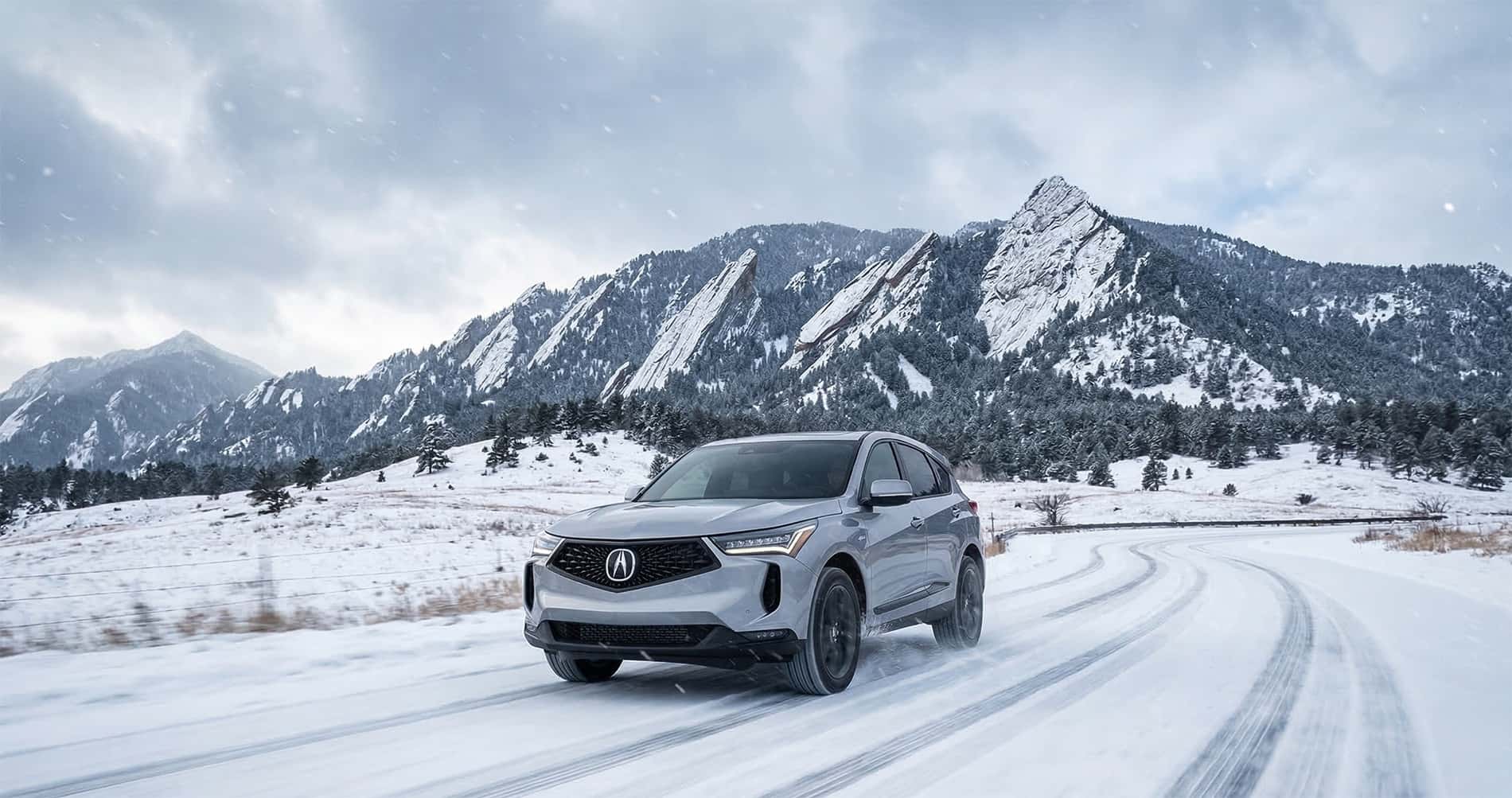
Fisher Acura | Colorado Winter Driving
AWD vs. 4WD in Snow: What Do Colorado Drivers Actually Need?
For most Front Range drivers, AWD with the right tires is the practical choice for snowy commutes and maintained mountain highways. Traditional 4WD becomes more valuable when you regularly tackle rough, unplowed roads or terrain that calls for low-range gearing.
At Fisher Acura in Boulder, we recommend choosing a drivetrain around your actual winter routes, not the badge on the tailgate. Start with your typical drive, then compare what each system can and cannot do.
Interactive Winter Drive Finder
Where do you drive when it snows?
Choose the trip that best matches your routine. We’ll show which drivetrain deserves your attention and where tires or ground clearance change the answer.
Our recommendation
AWD for frequent snowy commutes
For travel between Boulder, Broomfield, and Denver on maintained pavement, an automatic AWD system offers useful takeoff traction without needing truck-oriented 4WD hardware.
Your deciding factors
- Tires suited to cold, slick pavement
- Predictable traction as conditions change
- Comfort and handling on your everyday route
Our recommendation
AWD and suitable winter tires
For maintained mountain highways and ski-area access, AWD is a strong everyday fit. What matters just as much is whether the installed tires, tread depth, and any required traction devices suit your route.
Your deciding factors
- CDOT restrictions and live road conditions
- Winter tire capability and tread condition
- Clearance and snow depth on the final approach
Our recommendation
Consider specialized 4WD
If reaching your home or a remote property regularly means deep ruts, uneven surfaces, and steep low-speed climbs, a suitably equipped 4WD vehicle with low-range gearing may justify its tradeoffs.
Your deciding factors
- Low-range availability, not just a 4WD badge
- Tires, clearance, and underbody protection
- Whether the road is safely passable at all
Our recommendation
FWD can be enough
On mostly cleared city streets, a front-wheel-drive vehicle with appropriate tires remains a sensible option. AWD is a worthwhile upgrade when slippery conditions are frequent, not a requirement for every Colorado driver.
Your deciding factors
- Condition and type of installed tires
- Ability to avoid severe-weather travel
- Actual road restrictions when you leave town
Recommendations are for vehicle selection, not a promise of safe travel. Snow depth, closures, and tire condition can change the answer on any route.
Understand the Hardware
AWD vs. 4WD: What's the real difference?
Both can send engine power to all four wheels. The meaningful distinctions are how they manage that power and whether the vehicle includes specialized hardware for difficult terrain. The badges alone do not tell you which vehicle stops or corners better on ice.
Made for changing road grip
AWD
- Power distribution
- Usually managed automatically, front to rear and sometimes side to side.
- Everyday advantage
- Useful traction as pavement changes from dry to wet, slushy, or snow-covered.
- Low-range gearing
- Generally not included in road-focused AWD vehicles.
More specialized, depending on vehicle
4WD
- Power distribution
- Can be driver-selectable, automatic, or locked, depending on the system.
- Terrain advantage
- Purpose-built versions help with difficult low-speed travel over rough surfaces.
- Low-range gearing
- Available on certain 4WD vehicles, but not guaranteed by the badge.
The terms overlap across brands. Review the actual drivetrain and equipment; neither designation tells you how quickly a vehicle stops on ice.
The Bigger Winter Safety Factor
AWD helps you get moving. Tires help you stop.
All four wheels can help distribute driving power, but every vehicle still depends on its tires for braking and cornering grip. On a slick downhill approach to an intersection, selecting 4WD cannot substitute for the right rubber or a lower speed.
Getting started
AWD and 4WD manage power delivery to help find usable traction.
Slowing down
Tire compound, tread, speed, and available grip govern braking performance.
Making a turn
Handling technology can help, but it cannot overcome a surface with inadequate grip.
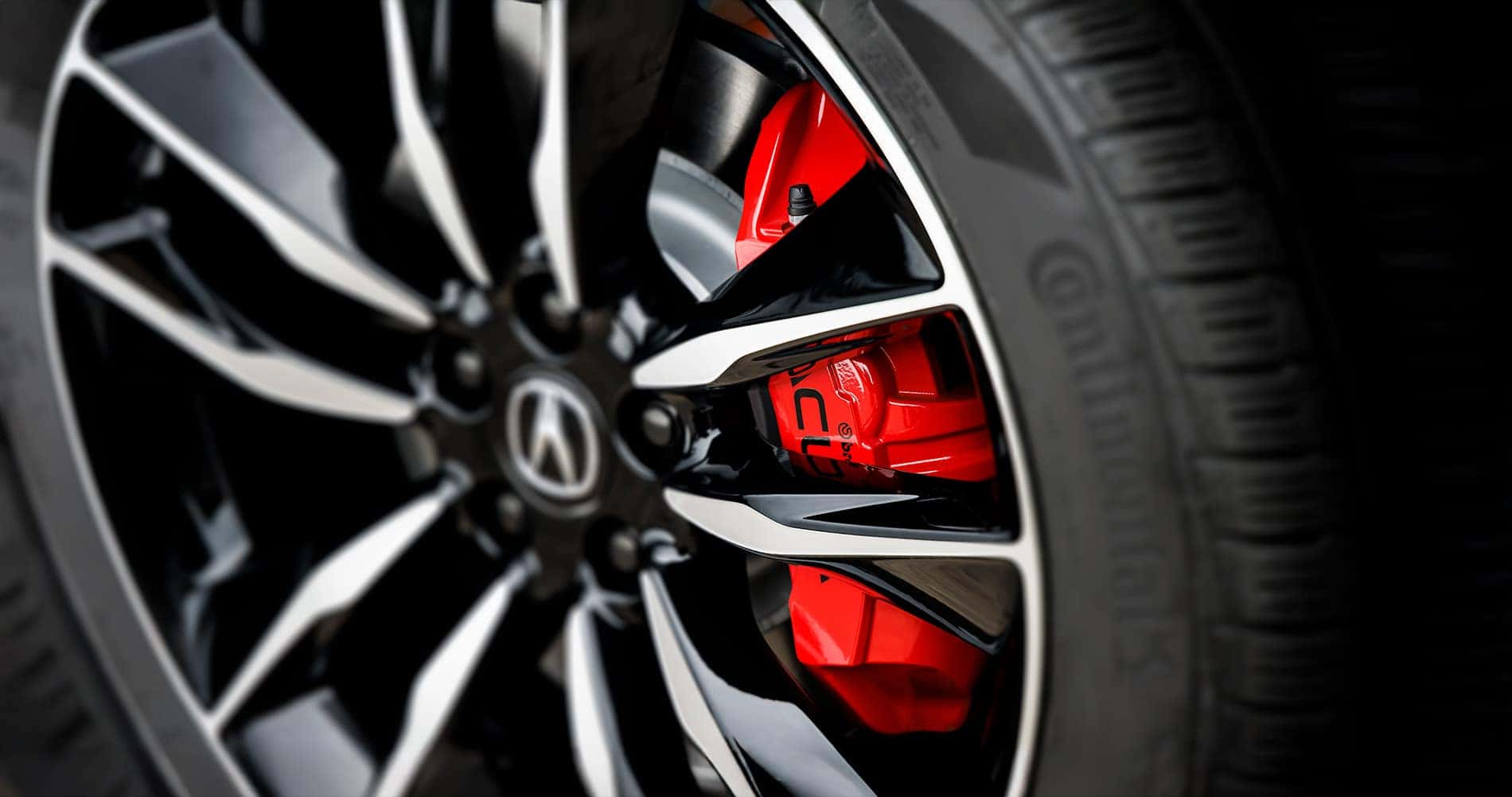
For frequent mountain travel, dedicated winter tires are worth serious consideration. All-weather tires with appropriate winter performance can serve other routines. Our Fisher Acura Tire Center can help you compare options for the vehicle you drive.
Colorado Rules You Need to Know
AWD isn't an exemption from Colorado's traction laws
CDOT identifies the I-70 corridor between Morrison and Dotsero for traction-law requirements from September 1 through May 31 and can impose restrictions elsewhere when conditions demand them. Always follow the current signs and alerts for your route.
When traction restrictions apply
Passenger Vehicle Traction Law
CDOT's current guidance addresses at least 3/16-inch tread depth and compliant tire designations or the use of chains or an approved alternative traction device. AWD or 4WD alone is not a reason to ignore the posted equipment requirements.
When stricter restrictions apply
Passenger Vehicle Chain Law
Every passenger vehicle must use chains or an approved alternative traction device, including AWD and 4WD vehicles. Confirm that your traction devices are approved and compatible with your vehicle before your trip.
Before leaving: check CDOT's official Traction and Chain Laws and COtrip road conditions. Weather closures apply regardless of drivetrain.
Your pre-trip winter checklist
The right drivetrain only works as part of a ready vehicle and a sensible travel plan.
01 / Tires
Check tread, inflation, tire type, and wear across all four tires.
02 / Restrictions
Review current forecasts, COtrip alerts, and posted restrictions.
03 / Equipment
Verify traction-device compatibility, clearance, and your owner's manual.
04 / Driving
Reduce speed, increase following distance, and postpone unsafe travel.
The Acura Connection
Where Acura AWD fits your Colorado routine
Acura's three SUV choices emphasize paved-road performance and daily usability rather than truck-style low-range 4WD. They do not all use the same AWD system, so check the specific configuration.
Compact everyday choice
Acura ADX
Available AWD with Intelligent Control System
A manageable footprint for city and suburban driving. Its available AWD system is different from SH-AWD.
Our two-row AWD recommendation
Acura RDX
Standard Super Handling All-Wheel Drive
Torque-vectoring SH-AWD supports responsive everyday handling and power delivery when grip changes.
Three-row family travel
Acura MDX
SH-AWD on equipped configurations
Adds flexible passenger space for longer drives while maintaining road-focused handling and traction technology.
Learn how torque vectoring works in our Acura SH-AWD guide, or compare models in our Colorado snow-ready SUV guide.
WHY SHOP WITH US
Make Your Acura AWD Choice With Fisher Acura
We know a Boulder-to-Denver commute and an I-70 winter trip demand different things from a vehicle. At Fisher Acura, we'll help you compare the exact AWD-equipped models, understand the pricing, and prepare for ownership with Acura-specific tire and service support.
Family-Owned Boulder Roots Since 1968
The Fisher family has served Boulder drivers since 1968. That long-term local presence gives you an established dealership team for your next Acura and the years of ownership that follow.
Acura Brand Specialists
We help you compare the ADX's available AWD, the RDX's standard SH-AWD, and equipped MDX configurations so you can choose the system that fits your actual roads and passengers.
Transparent Pricing, No-Pressure Guidance
You can compare the Acura, equipment, pricing, trade value, and financing without rushing the decision. Our approach gives the vehicle choice and purchase plan equal attention.
Factory-Trained Acura Service and Tire Support
Our Acura service team, tire center, and genuine-parts resources help you handle cold-weather tire fit, maintenance, and ownership questions after the test drive.
WINTER DRIVING QUESTIONS
AWD vs. 4WD in Snow: FAQs
Is AWD or 4WD better on icy roads?
Neither system can overcome a lack of tire grip on ice. Both can help distribute power when accelerating, but suitable tires, lower speeds, and extra stopping distance are essential for braking and turning.
Do I need 4WD to drive to Colorado ski areas?
Not typically for maintained paved routes. An AWD vehicle with tires appropriate to the conditions is a practical option, provided road restrictions, weather, and clearance allow travel. Challenging unplowed roads are a different use case.
Does AWD alone meet Colorado's Traction Law?
Do not assume the AWD badge alone guarantees compliance. CDOT's current guidance addresses tire tread depth, qualifying tire designations, and chains or approved alternative traction devices. Check the current posted requirements before traveling.
Can AWD or 4WD vehicles be required to use chains?
Yes. Under an active Passenger Vehicle Chain Law, all passenger vehicles must use chains or an approved alternative traction device, regardless of drivetrain. Always follow the owner's manual for compatible equipment.
Does the Acura ADX use the same AWD system as the RDX?
No. The ADX offers AWD with Intelligent Control System, while the RDX uses standard torque-vectoring Super Handling All-Wheel Drive. The MDX offers SH-AWD on applicable configurations.
Your Next Step
Compare Acura AWD Options or Continue Your Research
See current Acura SUVs, plan a test drive, or review the tire and road-rule details before your next mountain trip. Choose the path that answers your next question.
Start Shopping
Driving recommendations are general guidance, not guarantees of safety or legal compliance. Tire type and condition, ground clearance, drivetrain functionality, traction-device compatibility, and road restrictions vary. Check the applicable owner's manual and current CDOT notices before traveling.